


Idle Mine! Tycoon Mining Game
4.7125.00 Reviews
App Specs
- Version
- 1.5.1
- Updated On
- License
- Free
- Downloads
- 1,000,000+
- Developer
- Fumb Games
- Categories
- Simulation
- Platform
- Android
Screenshots
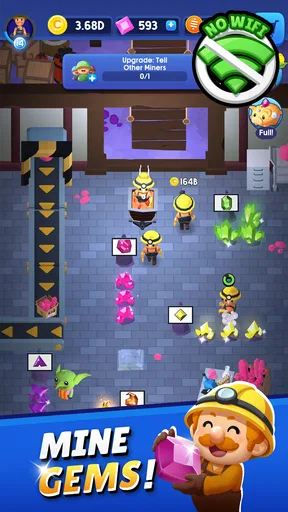
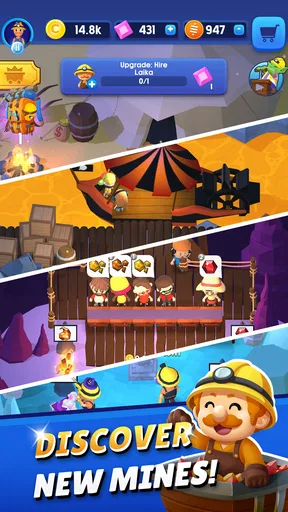
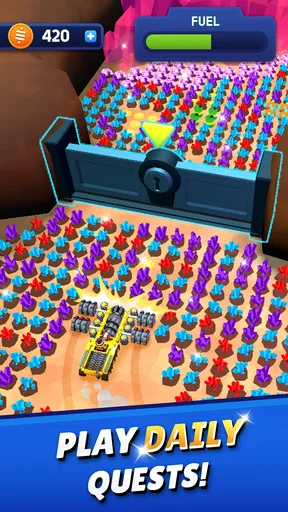

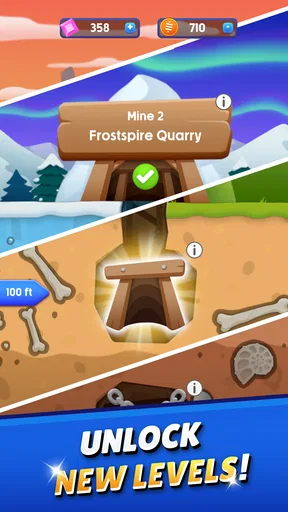


 Analysis by AppCompare
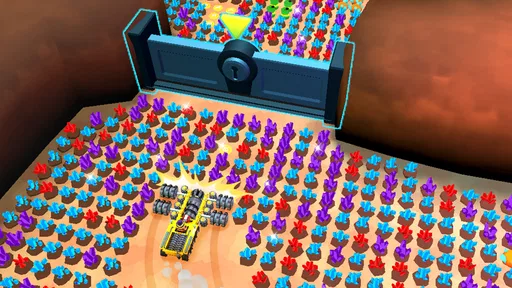
I spent time with Idle Mine! Tycoon Mining Game as a light simulation game built around the familiar pleasure of watching a small operation grow into something much larger. The basic idea is easy to understand: mine gems, improve the business, and keep the operation moving while you are away. What makes it worth discussing is not the mining theme by itself, but the way an idle game asks you to decide when to spend, when to wait, and how much attention you want to give it.
That makes this a good fit for players who enjoy gradual progress rather than constant action. I would not choose it for a tense strategy session or a traditional management simulator with a large number of systems to control. I would choose it when I wanted something approachable that could fill a few spare minutes, then continue feeling useful when I returned later. Fumb Games keeps the presentation focused on the tycoon fantasy, and the game’s free entry point makes it easy to try before deciding whether its rhythm suits you.
How the mining decisions shape the experience
The most important choice in an idle mining game is rarely a dramatic one. It is usually the small decision between improving what is already working and saving resources for a more meaningful step. In my experience, that is where the game’s decision space begins. A quick improvement can make the next short session feel more productive, while waiting can create a stronger sense of progress later. Neither approach is automatically correct, and that gives the simple loop a little more thought than tapping through upgrades without a plan.
I found it useful to treat each visit as a short planning window. Rather than spending immediately because a button was available, I first considered what kind of session I was about to have. If I only had a moment, a modest improvement felt more satisfying. If I knew I would leave the game alone for longer, I preferred to think about the next meaningful milestone instead of scattering resources across several small choices. This habit made the game feel less like a sequence of automatic clicks and more like a compact exercise in prioritization.
The tycoon framing also changes how I viewed progress. A gem is not just a collectible; it represents the output of an operation that should become more efficient over time. That perspective is helpful because it gives the repeated actions a purpose. I was not simply trying to make a number rise. I was trying to make the next return more worthwhile than the previous one.
There is a practical lesson here for new players: do not judge the game by the first few minutes alone. Early progress in an idle title can feel slow because the whole point is to establish a base that continues working. I recommend playing long enough to understand the return cycle before deciding whether the pacing is too relaxed. If you need immediate variety, the opening may feel limited; if you like watching a system gradually become more productive, the same opening can be pleasantly calm.
The game is also easy to fit around ordinary routines. I could imagine opening it during a coffee break, making a few decisions, closing it, and returning later without needing to remember a complicated sequence. That low memory burden is one of its strongest everyday qualities. It does not demand the kind of uninterrupted concentration expected by action games, and it is less intimidating than a detailed business simulator.
Worth Reading Before You Choose

EA SPORTS FC Mobile 26 Is a Bigger Football Game, but It Takes Time

Flipboard Shows What News Apps Must Do Beyond the Feed

Switching to Android Auto Means Rethinking Your Driving Routine

Google Calendar Makes a Crowded Week Easier to Manage

Ludo King Makes the Most of the Minutes Between Plans

Baby Panda World Brings Quick Play to Modern Phones, but Its Game Library Feels Busy
Why the free model changes the way I played
The game is free to download, which lowers the barrier for anyone curious about idle mining. It also includes optional purchases ranging from $0.99 to $99.99 per item, so the financial side deserves attention before you settle into the loop. I would approach those purchases as convenience choices rather than as part of the core reason to install the game. The better test is whether the basic progression is enjoyable without feeling pressured to spend.
For me, the healthiest way to play was to set a personal rule before getting invested: enjoy the planning loop first, and only consider an optional purchase if it solves a specific frustration. That prevents a common idle-game mistake, where a player spends simply because progress feels slower after the initial excitement fades. A purchase may make sense for someone who wants to support the developer or reduce waiting, but it is not a substitute for deciding whether the underlying rhythm is satisfying.
That tradeoff is especially relevant for younger players, although the listed content rating is Mature 17+. Families should pay attention to that rating and to the presence of in-app purchases before allowing access. I would not treat the free label as meaning there are no spending considerations. The game is easy to begin, but responsible use still means understanding how optional purchases fit into the experience.
Balancing patience with the urge to accelerate
Idle games create a particular kind of temptation: the longer you look at progress, the more you want to speed it up. Idle Mine! Tycoon Mining Game works best when I resist checking every tiny change. The experience becomes more rewarding when I give the operation time to produce something noticeable. Constantly reopening the game can make the waiting feel worse, while checking at sensible intervals turns each return into a small review of how well the previous decision worked.
This is one of the more useful strategies I can offer. Give yourself different play modes. Use short visits for spending and planning, and longer gaps for letting the mine do its work. That separation keeps the game from becoming a repetitive search for tiny gains. It also makes the idea of an expanding empire feel more convincing, because the operation has time to exist independently of your attention.
The risk is not dramatic in the way it would be in a competitive strategy game, but there is still a meaningful opportunity cost. Every resource used in one direction is unavailable for another direction. Even when the consequences are gentle, that choice encourages a forward-looking mindset. I liked that the game could be relaxing without being completely mindless.
Adapting when the first plan stops feeling efficient
A plan that feels good at the beginning may not remain the best plan later. This is common in progression games: early improvements are easy to understand, but later decisions require more patience because the next gain may take longer to reach. I tried to avoid becoming attached to the first routine that worked. Instead, I treated each return as a chance to ask whether my previous spending had actually improved the next session.
That approach is more valuable than chasing a perfect opening strategy. Idle Mine! Tycoon Mining Game is designed for repeated progress, so the player can learn through small adjustments rather than needing to make one flawless decision. If a choice does not feel productive, the answer is usually to change the next priority, not to abandon the entire game immediately.
I also found that attention level matters. On a busy day, I wanted a simple routine with minimal thought. On a quieter evening, I was more willing to compare possible improvements and think about the next stage of growth. The game accommodates both moods, but it does not transform into a deep management simulation just because you concentrate harder. Players looking for complex logistics, detailed staffing, or extensive economic modeling should choose a more demanding alternative.
That limitation is important. The appeal here comes from clarity and momentum, not from a large web of interacting systems. If you enjoy games such as detailed city builders or business simulators because they let you control every part of an operation, this may feel too streamlined. If those games usually overwhelm you, the simpler structure may be exactly what makes this one approachable.
What gives the progression staying power
The long-term question is whether the mining loop remains interesting after the novelty of the theme wears off. I think the answer depends heavily on what you want from a simulation game. The sense of growth can carry the experience for players who enjoy incremental improvement, especially when returning to see that earlier decisions have created a better foundation. The game’s strongest long-term feature is therefore not complexity but continuity: each session connects naturally to the next.
That continuity also creates a useful planning horizon. I liked thinking in three layers: what I could improve now, what I wanted the next return to accomplish, and what kind of operation I was gradually building. The first layer keeps the game immediate. The second gives a reason to close it and come back. The third preserves the tycoon fantasy beyond a single upgrade.
Players who need frequent new mechanics, story events, or direct competition may eventually find the loop repetitive. I would not recommend this as the only game on a device for someone who wants constant novelty. It works better as a companion game: something to check between more active titles, during a commute, or while taking a short break. Its relaxed structure is a strength when used intentionally, but it can feel thin if you expect every session to offer a new challenge.
The current version is 1.5.1, and the game requires Android 10 or later. That makes the operating-system requirement worth checking before downloading, particularly if you are using an older phone or tablet. On supported hardware, the main appeal is convenience rather than technical spectacle. I would choose it for the loop and accessibility, not for demanding visuals or a showcase of device performance.
Its audience is already fairly broad: the game has passed one million installs and holds a 4.7 average from around 1.9 thousand ratings. Those figures suggest that the straightforward idle format has found an audience, but they should not replace personal judgment. A highly rated clicker can still be wrong for someone who dislikes waiting, repeated upgrades, or optional purchase prompts. I see the response as evidence of a clear appeal, not a guarantee that every player will enjoy the same pace.
A realistic routine for getting more from each session
Imagine opening the game during a lunch break. You have enough time to review the mine, collect or inspect what has accumulated, and decide whether your next improvement should support immediate progress or a longer period away. Instead of spending everything automatically, you make one deliberate choice, close the game, and return after work. The second visit becomes more informative because you can compare the result with your expectation.
That simple routine is where I think the game is at its best. It turns idle time into a feedback loop. You make a decision, leave the operation alone, return, and evaluate the outcome. If you repeat that process, you begin to understand your own preferences: perhaps you favor reliable short-term gains, or perhaps you enjoy saving for a bigger transformation. The game gives room for both styles without requiring a spreadsheet.
A second useful habit is to avoid treating every available reward as an instruction. Idle games often present frequent opportunities to tap, collect, or improve, but not every opportunity deserves immediate attention. I found the experience calmer when I separated “available now” from “worth doing now.” That distinction is a small but meaningful piece of strategy, and it helps prevent the game from becoming a reflexive button-pressing routine.
A third tip is to judge purchases by time saved rather than by excitement. If an optional item is tempting, ask whether it improves the way you want to play or merely removes a pause that could have been part of the intended rhythm. This is particularly important because the purchase range stretches from a small amount to a much larger one. The free version should be your baseline test; spending should come later, if it comes at all.
Who should install it, and who should look elsewhere
I would recommend this game to someone who likes incremental tycoon experiences, enjoys checking progress in short bursts, and wants a simulation game that is easy to understand without a lengthy tutorial. It is also a good choice for players who appreciate planning at a modest scale. You can think about priorities and timing, but you do not need to manage a complicated organization or memorize numerous systems.
I would be more cautious about recommending it to players who dislike idle mechanics on principle. If progress that continues while you are away feels unsatisfying, the central appeal will not suddenly change because the setting involves gems. I would also point action-oriented players toward a more interactive mining or strategy game, since this title is built around gradual development rather than moment-to-moment control.
It may not be the right choice for someone seeking a fully transparent economic simulation either. The tycoon language creates a satisfying sense of expansion, but the experience remains streamlined. Its decisions are meaningful within the boundaries of an accessible clicker, not comparable to the layered planning found in a serious management game. Knowing that distinction before installing it will prevent disappointment.
The Mature 17+ rating is another reason to make a deliberate choice, especially for families. I would check the rating on the device’s store page and consider whether the game’s purchase options are appropriate for the intended player. The free download is convenient, but the surrounding account and spending settings still deserve ordinary caution.
My strategy verdict after settling into the loop
What stays with me is the balance between low effort and small decisions. Idle Mine! Tycoon Mining Game does not ask me to master a complicated economy, yet it gives enough room to think about timing, priorities, and the value of waiting. The gem-mining theme supports that structure well because the fantasy of building an operation naturally fits gradual accumulation.
Its weaknesses are closely tied to its strengths. The clear loop can become repetitive, the relaxed pace will not satisfy players who need constant interaction, and optional purchases mean that free-to-play expectations should be set carefully. I also would not confuse its tycoon presentation with a deep business simulator. It offers a lighter form of management, designed for regular check-ins rather than extended planning sessions.
Still, I found the game easy to recommend to the right person. If you want a free simulation title that can sit quietly in the background, reward thoughtful upgrade timing, and give short visits a sense of purpose, it is a pleasant option from Fumb Games. My advice is to begin without spending, establish a comfortable return routine, and see whether the progress itself keeps you interested. If you enjoy that gradual climb, the mine can become a satisfying little habit; if you need richer systems or more direct control, another genre of simulator will serve you better.
In the end, the best way to play is to treat each return as a planning decision, not a demand for constant tapping. That mindset brings out the game’s real value. It is less about rushing toward a final number and more about shaping a steady operation one choice at a time. For an accessible idle mining game with a clear tycoon identity, that is a solid and enjoyable proposition.
Pros
- Simple idle gameplay works well for short play sessions.
- Mining upgrades create a satisfying sense of steady progression.
- Offline earnings let your mine continue producing while you are away.
- Colorful visuals and clear menus make the game easy to follow.
- Multiple managers and mine areas add variety beyond basic tapping.
Cons
- Progress can slow noticeably without watching ads or spending currency.
- Repeatedly collecting resources may feel monotonous over time.
- Ads can interrupt the experience
- especially when claiming bonus rewards.
- Later upgrades often require long waits and substantial resource grinding.
- The game may use significant battery during extended active sessions.
FAQs for Idle Mine! Tycoon Mining Game
What is Idle Mine! Tycoon Mining Game?
Idle Mine! Tycoon Mining Game is an idle management game in which you build and expand a mining business. You hire and improve workers, unlock new underground areas, collect valuable resources, and invest earnings into better equipment. Progress continues while you are away, making it suitable for players who enjoy gradual upgrades without needing constant attention.
Can I play Idle Mine! Tycoon Mining Game without an internet connection?
The game may allow some mining and management features to continue offline, but certain functions can depend on an internet connection. For example, advertisements, cloud synchronization, purchases, events, and leaderboard features may require online access. Before traveling or playing offline, it is best to open the game while connected and check which rewards and features remain available.
Is Idle Mine! Tycoon Mining Game free to download and play?
Idle Mine! Tycoon Mining Game is generally available as a free download, allowing players to begin mining without paying upfront. However, the experience can include optional in-app purchases, such as currency, boosts, or ad-removal offers. Advertisements may also appear during normal play. You can progress without spending money, although purchases may speed up upgrades.
How does progression work in Idle Mine! Tycoon Mining Game?
Progress is based on earning mining income and reinvesting it into your operation. You can usually upgrade workers, shafts, storage, transportation, and other production systems to increase resource output. Unlocking deeper areas introduces new goals and earning opportunities. Because it is an idle game, returning regularly to collect profits and activate available boosts is important.
Is Idle Mine! Tycoon Mining Game suitable for children?
The game is generally easy to understand because its main mechanics involve tapping, managing upgrades, and collecting virtual earnings. Nevertheless, parents should review the age rating, advertising practices, and in-app purchase settings before allowing children to play. If a child uses a shared device, enabling purchase restrictions is recommended, since optional boosts or currency may be offered.


